
|
|

|
A Dinner Cutlery? It's what you grab for your main meal. Usually, it's part of your everyday silverware, and it's the biggest fork you'll see at the table, give or take a fancy one.
🧩 What's it made of?
Tines: the pointy bits used to stab and lift grub
Most have four tines, but some have three.
Slots/Spaces: These are the gaps between the tines; they help you cut and pick up food
Shoulder: The area where the tines meet the handle; it gives strength.
Neck: The thin bit that attaches the tines to the handle.
Handle: The part you hold; it can be simple or snazzy.
Tip/End: The end of the handle, which might be round, square, or pointy.
⚖️ How big is it?
Length: About 7 to 8 inches (17.5 – 20 cm)
Width: About 1 inch (2.5 cm) at the widest spot
Weight: 40–70 grams, give or take, depends on the material
🍽️ What's it for?
Main meals(meat, pasta, rice, and the like)
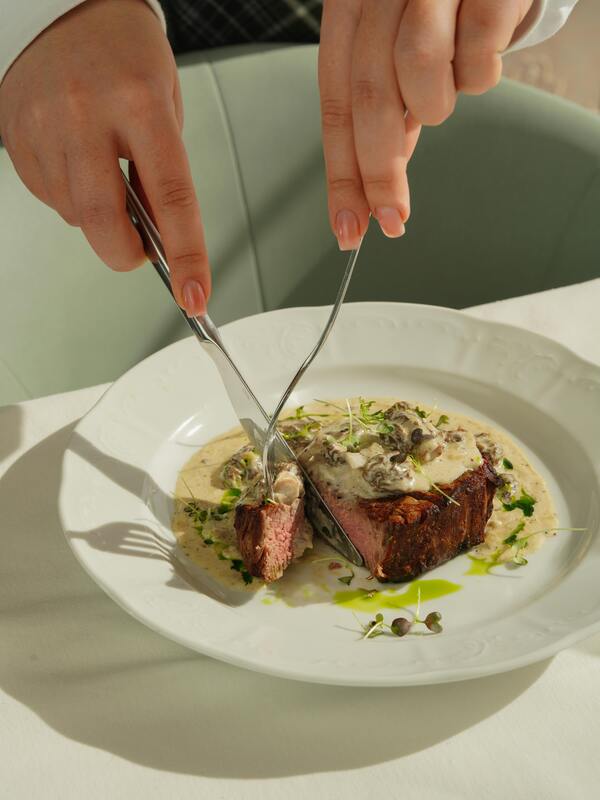
Use it with a dinner knife (knife in the right hand, fork in the left for cutting)
Also good for salads, veggies, and heavy foods.
🧠 What's the difference?
Fork Type Size Use
Salad Fork Smaller (6–7) For salad or starters
Dessert Fork Smallest (5–6) For cakes, etc.
Fish Fork Medium (6.5–7.5) For fish
Oyster Fork Tiny (4–5) For shellfish
Serving Fork Bigger (8–9) For serving
🏗️ What is it made of?
Stainless Steel: The most used material, easy to clean and tough.
Silver-Plated: Fancy looking, often for formal meals.
Sterling Silver: Pricey, heavy, needs polishing.
Plastic or Bamboo: Use once, good for the planet, used for casual stuff.
Titanium or Alloy: Light, modern, for trips.
🕰️ Quick History
Forks started way back in Egypt, Greece, and Rome, but for serving food.
Around the 11th century, forks were in Byzantine and Italy.
France and England started using them in the 17th century, becoming normal in the 18th–19th centuries.
The four-tine design we have now came about in the 19th century – good for both spearing and scooping.
🧼 How to clean?
Wash silver or fancy forks by hand.
Stainless steel can go in the dishwasher.
Don't soak too long, or they'll get tarnished.
Dry to avoid spots.
Polish silver forks now and again with a soft cloth.
🧭 Where does it go on the table?
In a fancy Western table setting:
The Dinner Cutlery is on the left of the plate.
If you have a bunch of forks, they go outside to inside – salad fork then Dinner Cutlery.
🎨 What are the different designs?
Classic: Fancy designs.
Modern: Simple.
Ergonomic: Easy-to-hold handles.
Weighted: For fancy restaurants.
🌿 How to be green?
Buy stainless steel or bamboo versions.
Ditch the plastic forks.
If your metal forks break, recycle them.
🧩 What's it made of?
Tines: the pointy bits used to stab and lift grub
Most have four tines, but some have three.
Slots/Spaces: These are the gaps between the tines; they help you cut and pick up food
Shoulder: The area where the tines meet the handle; it gives strength.
Neck: The thin bit that attaches the tines to the handle.
Handle: The part you hold; it can be simple or snazzy.
Tip/End: The end of the handle, which might be round, square, or pointy.
⚖️ How big is it?
Length: About 7 to 8 inches (17.5 – 20 cm)
Width: About 1 inch (2.5 cm) at the widest spot
Weight: 40–70 grams, give or take, depends on the material
🍽️ What's it for?
Main meals(meat, pasta, rice, and the like)
Use it with a dinner knife (knife in the right hand, fork in the left for cutting)
Also good for salads, veggies, and heavy foods.
🧠 What's the difference?
Fork Type Size Use
Salad Fork Smaller (6–7) For salad or starters
Dessert Fork Smallest (5–6) For cakes, etc.
Fish Fork Medium (6.5–7.5) For fish
Oyster Fork Tiny (4–5) For shellfish
Serving Fork Bigger (8–9) For serving
🏗️ What is it made of?
Stainless Steel: The most used material, easy to clean and tough.
Silver-Plated: Fancy looking, often for formal meals.
Sterling Silver: Pricey, heavy, needs polishing.
Plastic or Bamboo: Use once, good for the planet, used for casual stuff.
Titanium or Alloy: Light, modern, for trips.
🕰️ Quick History
Forks started way back in Egypt, Greece, and Rome, but for serving food.
Around the 11th century, forks were in Byzantine and Italy.
France and England started using them in the 17th century, becoming normal in the 18th–19th centuries.
The four-tine design we have now came about in the 19th century – good for both spearing and scooping.
🧼 How to clean?
Wash silver or fancy forks by hand.
Stainless steel can go in the dishwasher.
Don't soak too long, or they'll get tarnished.
Dry to avoid spots.
Polish silver forks now and again with a soft cloth.
🧭 Where does it go on the table?
In a fancy Western table setting:
The Dinner Cutlery is on the left of the plate.
If you have a bunch of forks, they go outside to inside – salad fork then Dinner Cutlery.
🎨 What are the different designs?
Classic: Fancy designs.
Modern: Simple.
Ergonomic: Easy-to-hold handles.
Weighted: For fancy restaurants.
🌿 How to be green?
Buy stainless steel or bamboo versions.
Ditch the plastic forks.
If your metal forks break, recycle them.